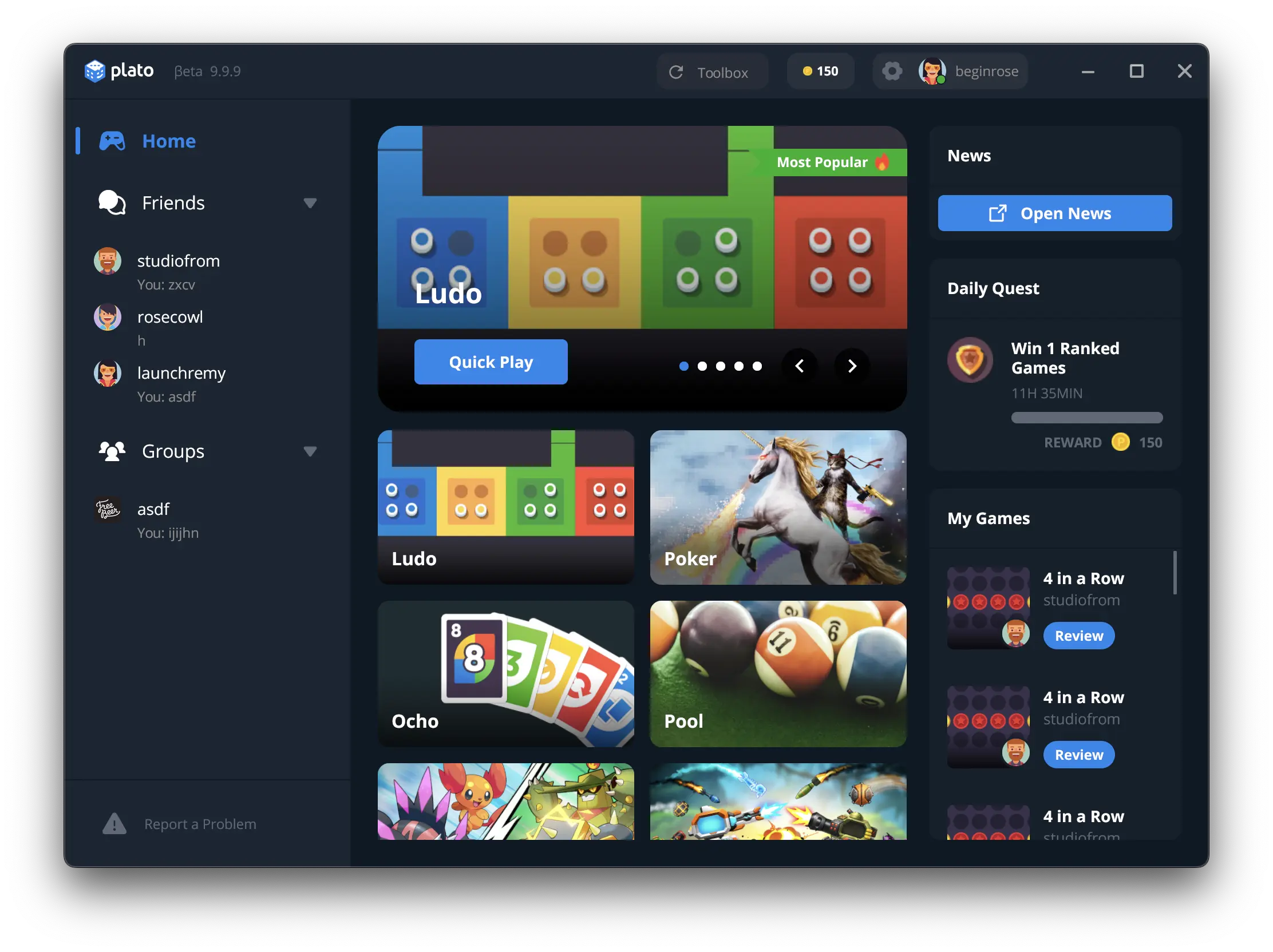
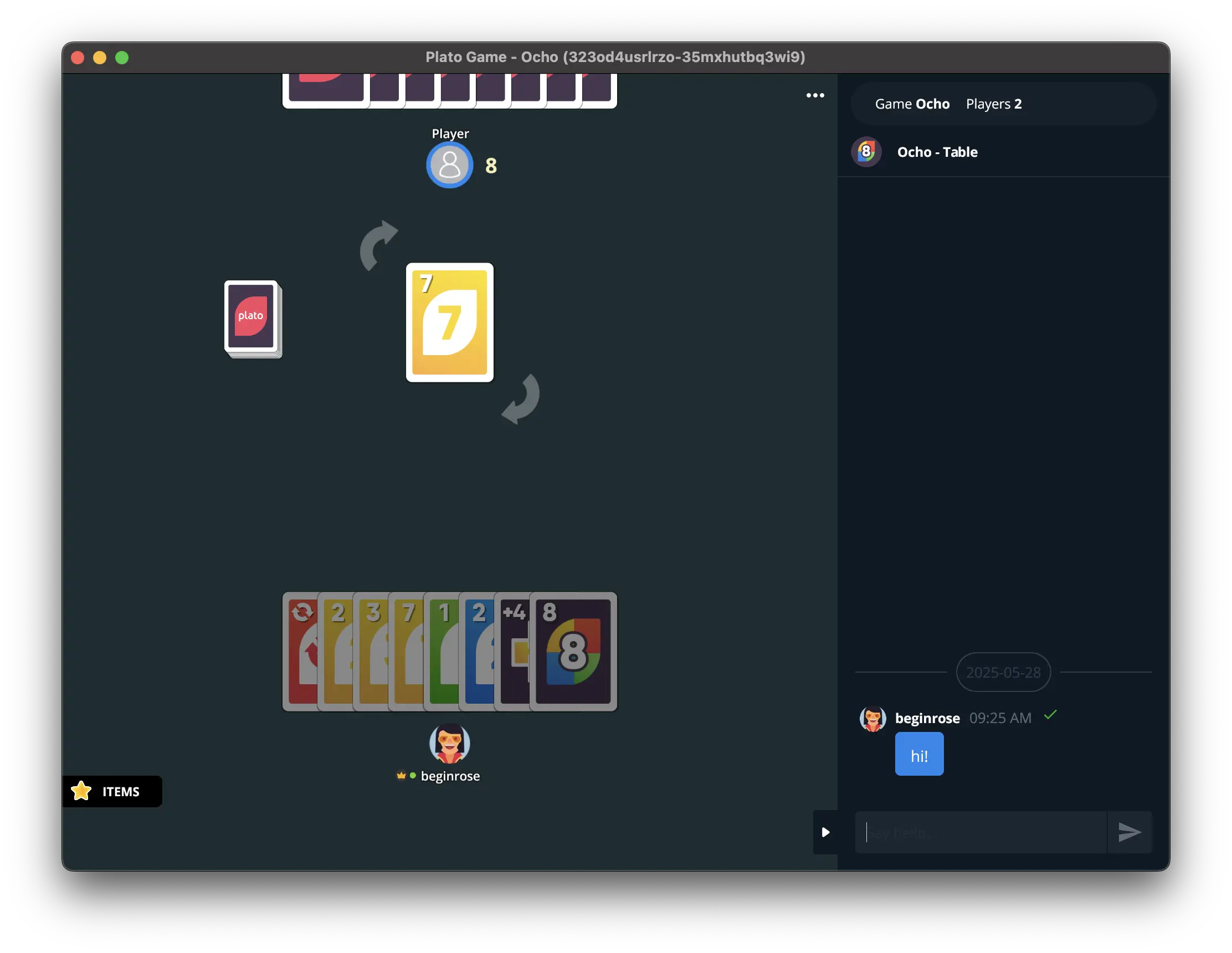
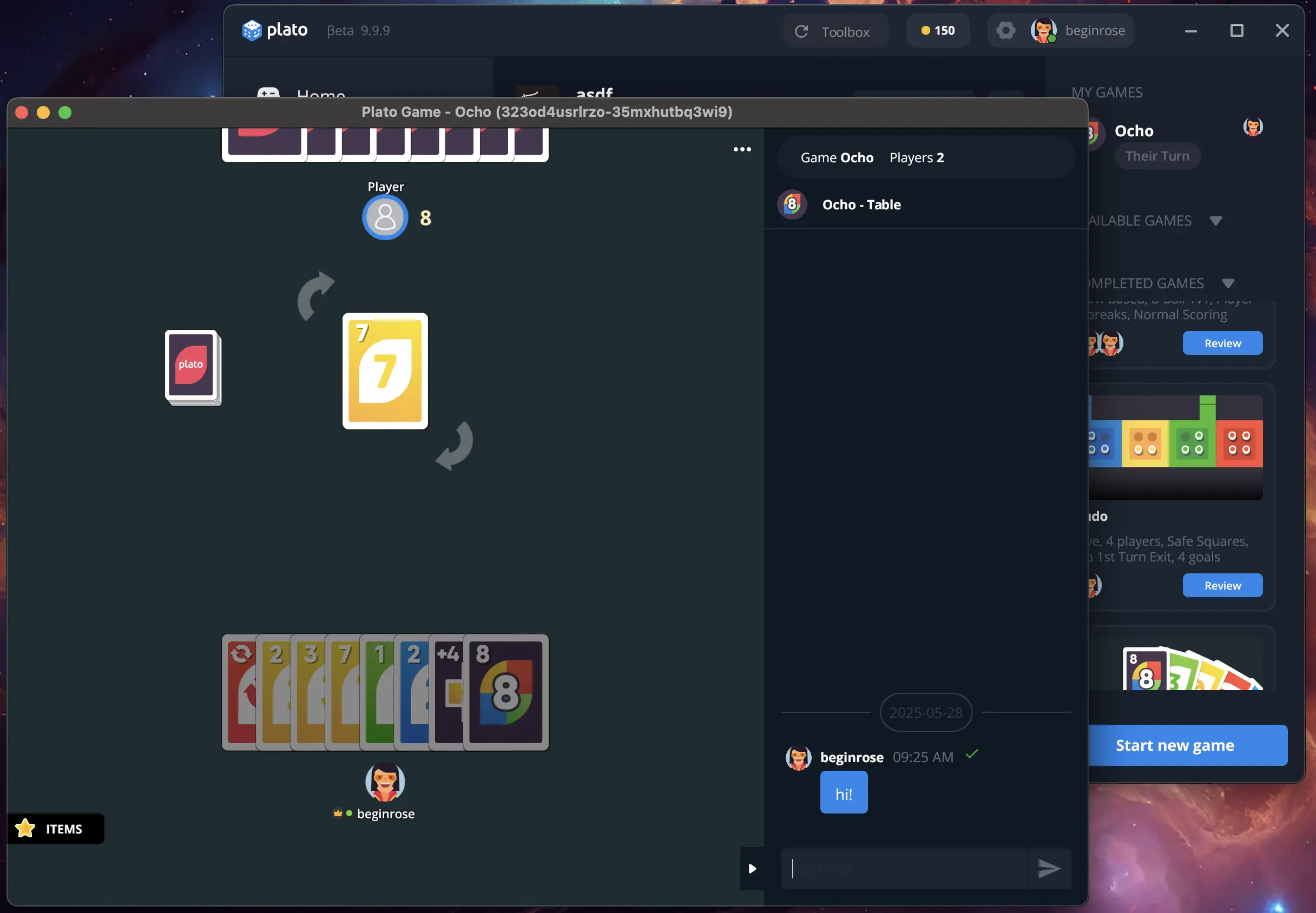
A cross-platform desktop client for Plato’s games: a primary chat window and any number of independent game windows, on Windows, macOS and Linux. Built in Go with the Gio immediate-mode toolkit, and bound directly to the C and C++ libraries it needed: ANGLE for OpenGL ES, V8 for the game runtime, SQLite for state, libwebp for images. The product is discontinued; the architecture is the part worth describing.
What I built
A reactive, multi-window architecture. Every window is a view over one SQLite database, which is the single source of truth. State changes are written once and every window that shows them updates, so multi-window synchronisation is a consequence of the design rather than a feature. The stream and inter-window tooling became a reusable library, skel, which keeps the concurrency race-free by construction.
A self-updater on binary patches. Clients update themselves with a patch against the running binary rather than a fresh download, which made updates cheap enough to ship often.
The game runtime, embedded. Game logic runs in V8 inside the client and speaks a binary protocol to the backend, so a game is data the client receives, not a build it ships.
Native where it matters. The Windows COM interfaces for AAC audio decoding and toast notifications are written in pure Go, with no cgo. The macOS equivalents are Objective-C and C. The same techniques are open source on this domain, in nativeaudio and go-toast.
What it took
Low-level systems work, a high-concurrency architecture and custom GUI tooling, all inside the Go ecosystem and all shipped to people’s desktops. The product was discontinued in 2025. It remains the clearest example of the kind of program I build.